I failed math in high school.
Math was never my enemy, but I got distracted once when the teacher was explaining the basics. The lessons moved forward, and I never quite caught up. At first, it was just numbers. Then the alphabet joined in. Then symbols—more symbols. A chaotic party of mathematical expressions where I never truly felt welcome. It all blurred together, and when exam time came, I saw no point. I didn’t ask for help—I was embarrassed.
I had tried once, back in fourth grade. It was just multiplication. I turned to my mom, but I felt her frustration. After more than an hour of trying to help me solve my homework, she couldn’t handle it anymore. “Intindihin mo kasi!” she snapped, before leaving me just as clueless as before. I still needed help, but I didn’t want anyone shouting at me or making me feel stupid—so I stopped asking.
Still, I wanted to understand. I wanted to be in that exclusive circle of people who were friends with Math, but I felt like an outcast. Math hated me, and that was the narrative i stuck to. I blamed myself—my short attention span, my inability to grasp numbers fast enough, just being stupid at math.
I loved my mom, and I refused to let Math be the friction between us. So I never asked her for help again. No point in both of us getting stressed out with something that was i was hopeless at, and at that time, i was convinced that effort wouldn’t change a thing. I muddled through it on my own, my grades barely passing.
Then I started homeschooling my kids.
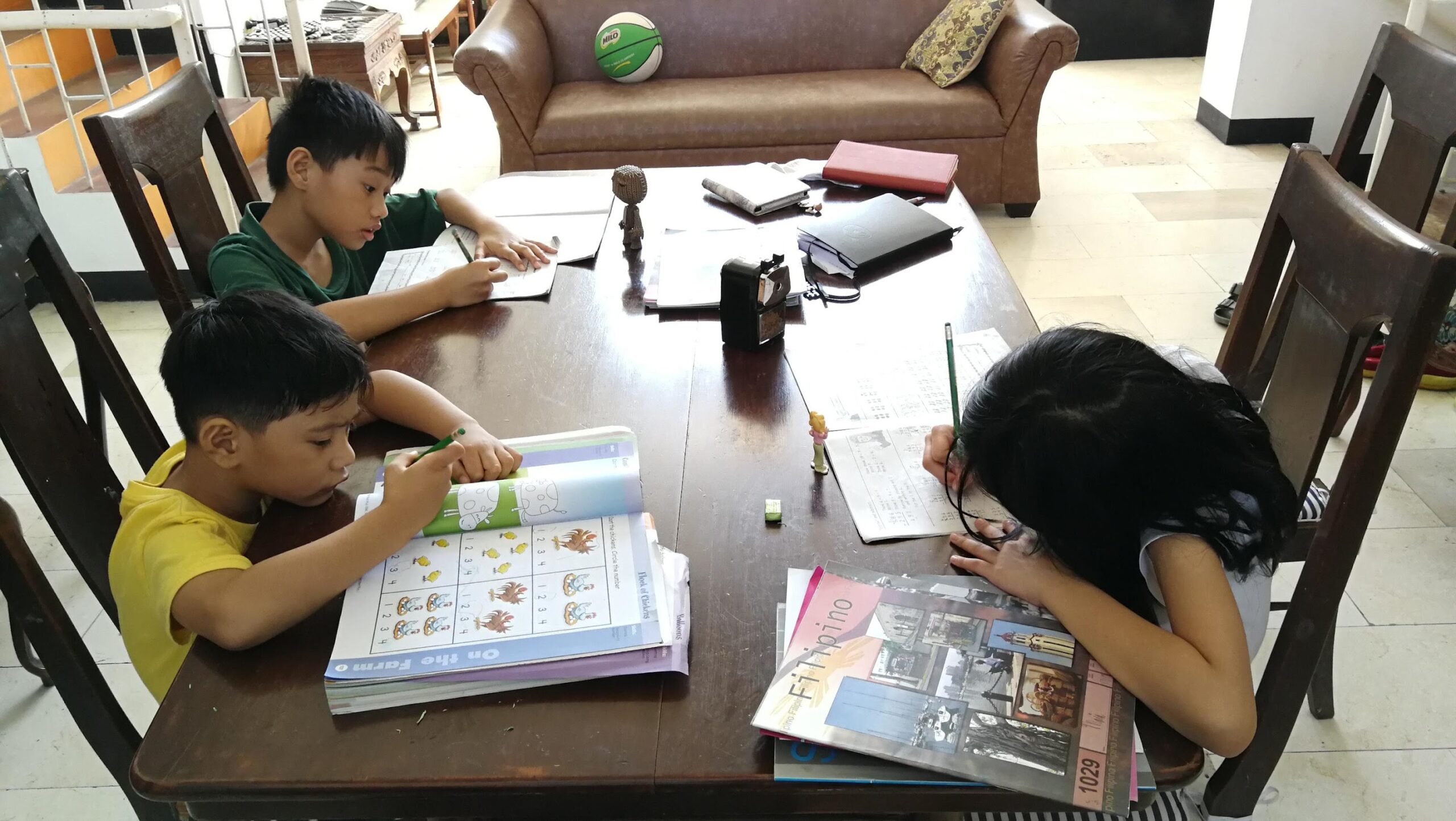
Math hadn’t changed—it still cast a dark shadow. But this time, something was different. I wanted my kids to feel capable. I wanted to do for them what I had needed as a child—patience, time, understanding. Yet when we sat down for Math, it was like mixing oil with water. My patience was limited, and, inevitably, I heard myself say the dreaded words: “Intindihin mo kasi!” – to my 4th grade son, whose patience for math was even shorter than mine.
I saw the pain in my child’s eyes —the same frustration that had followed me for years.
So I stopped. Took a step back. Asked for a break.
I cried so many times, doubting my choices. Was I causing more harm than good? I barely understood the subject myself—who was I to teach it? I felt like an impostor. So I did what I had to: I learned. YouTube, TikTok, Instagram—I watched lessons in different languages and difficulty levels, desperately trying to make sense of the lessons. Math was just one of the many subjects, and i was teaching 3 students of different grade levels.
I read that meditation could help with patience, so I tried that too. Deep breaths. Yoga. Anything to keep the Hulk in me from surfacing.
I stocked up on whiteboards and markers—so many markers. Colors, refills, bulk orders, free shipping. Small joys.
But every time I brought out the whiteboard, my son’s expression twisted in agony. A loud “Nooooooo!” followed by teary-eyed rants about how Math was irrelevant, unfair, and should be abolished.
My inner child nodded in agreement. But the mother in me wouldn’t let him quit.
So I struck a deal: “I’ll give you five minutes to rant. Scream, complain, get it out of your system. After that, no more drama—we work.”
Shockingly, it worked.
On days when frustration lingered, I gave him a choice: “Do you want to do drama or work? You can’t do both.”
Finished work meant more playtime—the reward waiting behind the right choice.
Some days, I’d surprise them with a movie, a treat, or a day out. No Math today. You deserve a break. (Actually—I deserve one too.)
I celebrated them. Their childhood. Their emotions—so much like adults, but still fragile. Push too hard, and they break too.
I affirmed their efforts. Acknowledged their victories, big and small. As the lessons grew harder, I became less of a teacher and more of a teammate. I didn’t know the answers—I learned with them. We struggled together, got stumped together, took breaks together. Cookies, fruit shakes, laughter. Balancing stress with comfort.
“We don’t have to do everything right now,” I’d tell them. “We’ll only try to learn a page or two, then you can go pick up your guitar, a book, or play the piano after.”
My mental health. Their mental health. Mine to protect.
It was exhausting. Emotionally draining.
I had traded a job for this. No promotions. No paycheck. Just the belief that they could do it—and my determination to make them see it too.
And somehow, the universe rewarded me.
I got hugs. “Thank you, Mommy.” Kisses. I love you’s.
A currency that never loses its worth.
But parenting isn’t just about building a safe space—it’s about preparing them to step outside it.
I had poured patience, effort, and love into teaching them. But had I made things too easy? When they finally left the comfort of home and entered the real world—into a traditional school setting—would they sink or swim?
I braced myself. The true test was about to begin.